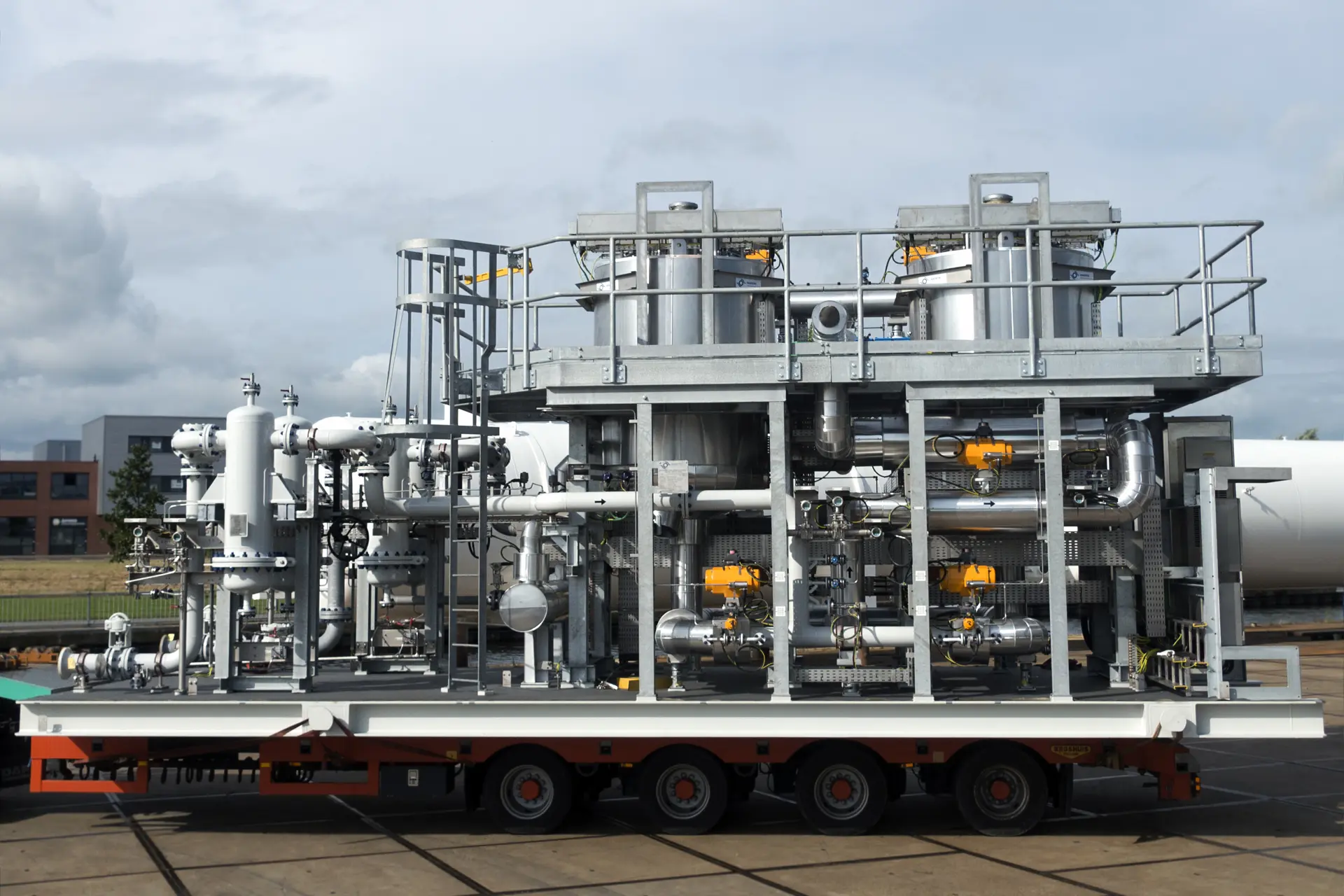
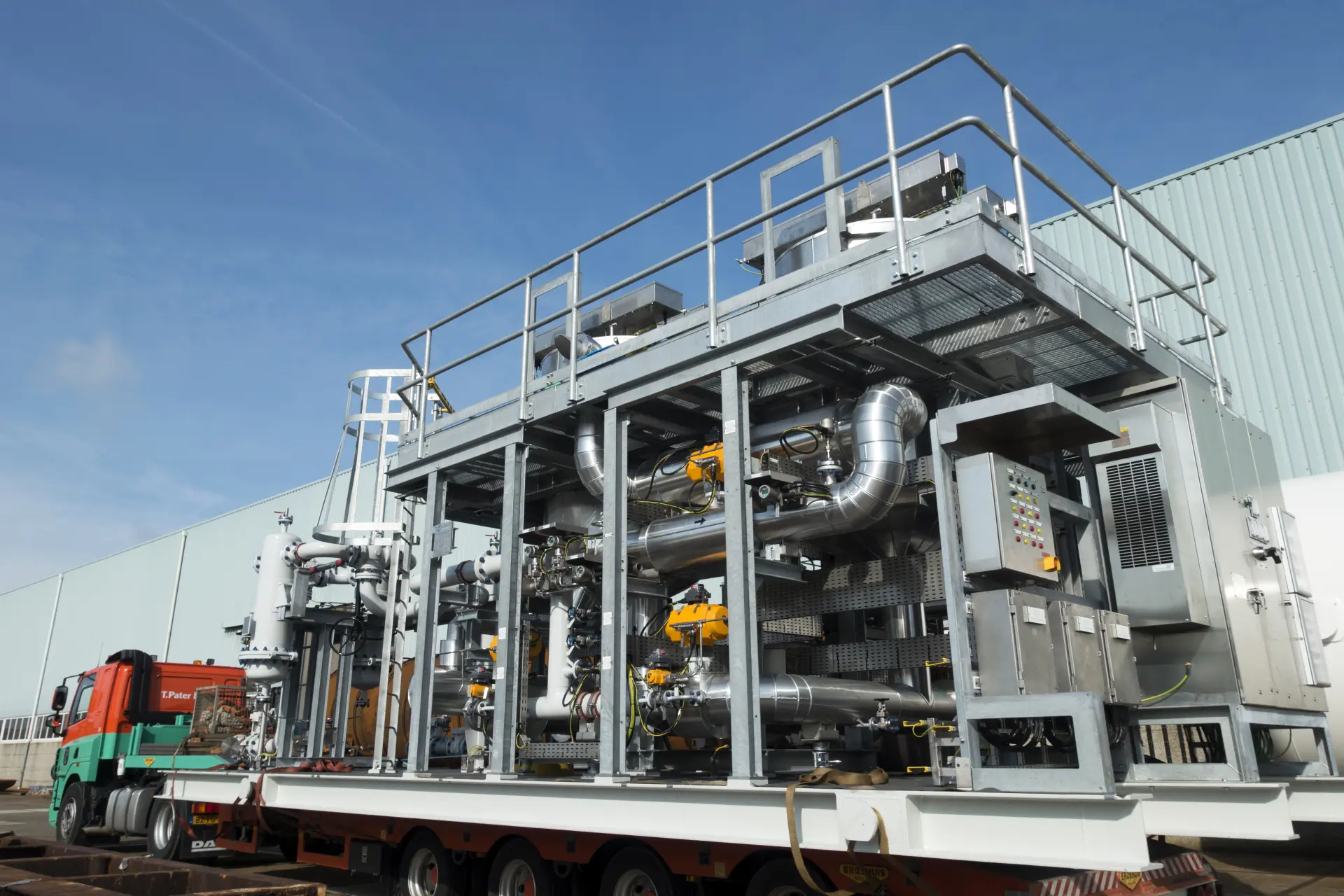
HADETEC Temperature Swing Adsorption (TSA) air dryer packages are designed for high-capacity applications where stable pressure, ultra-low dew point and minimal compressed air loss are key requirements. These systems regenerate the desiccant using heat, rather than relying on large amounts of purge air, making them particularly suitable for continuous, large-scale industrial operations.
In standard TSA configurations, desiccant regeneration is achieved by applying external heat sources such as electric heaters or steam. This significantly reduces purge air consumption compared to heatless systems and ensures stable, long-cycle operation with consistent dew point performance. For further optimization, HADETEC offers advanced TSA configurations:
- Heat of Compression (HOC) dryers: These systems utilize the available heat from the compressor discharge air to regenerate the desiccant. By recovering and reusing this energy, HOC dryers eliminate the need for external heating, resulting in highly energy-efficient operation with minimal additional power consumption.
- Zero-purge loss dryers (closed-circuit systems): In this configuration, the regeneration process takes place in a closed loop, preventing the loss of compressed air during operation. This results in no purge air consumption, maximizing system efficiency and reducing operational costs, especially in high-capacity installations.
TSA air dryer packages are ideally suited for:
- Large air flow volumes
- Energy-optimized systems (HOC)
- Applications requiring stable pressure or very low dew points
- Continuous operation in demanding industrial environments
A typical TSA Type Air Dryer Package includes
- Pre-filtration / coalescing filter
- Twin adsorber vessels filled with high-performance desiccant
- After filtration / particle filter
- Heating system (electric or steam) for desiccant regeneration (for heated TSA systems)
- Blower unit for regeneration air circulation (for blower purge configurations)
- Heat recovery system (for Heat of Compression (HOC) dryers)
- Closed-loop regeneration system (for zero-purge loss configurations)
- Interconnecting piping and automatic switch-over valves for adsorption and regeneration cycles
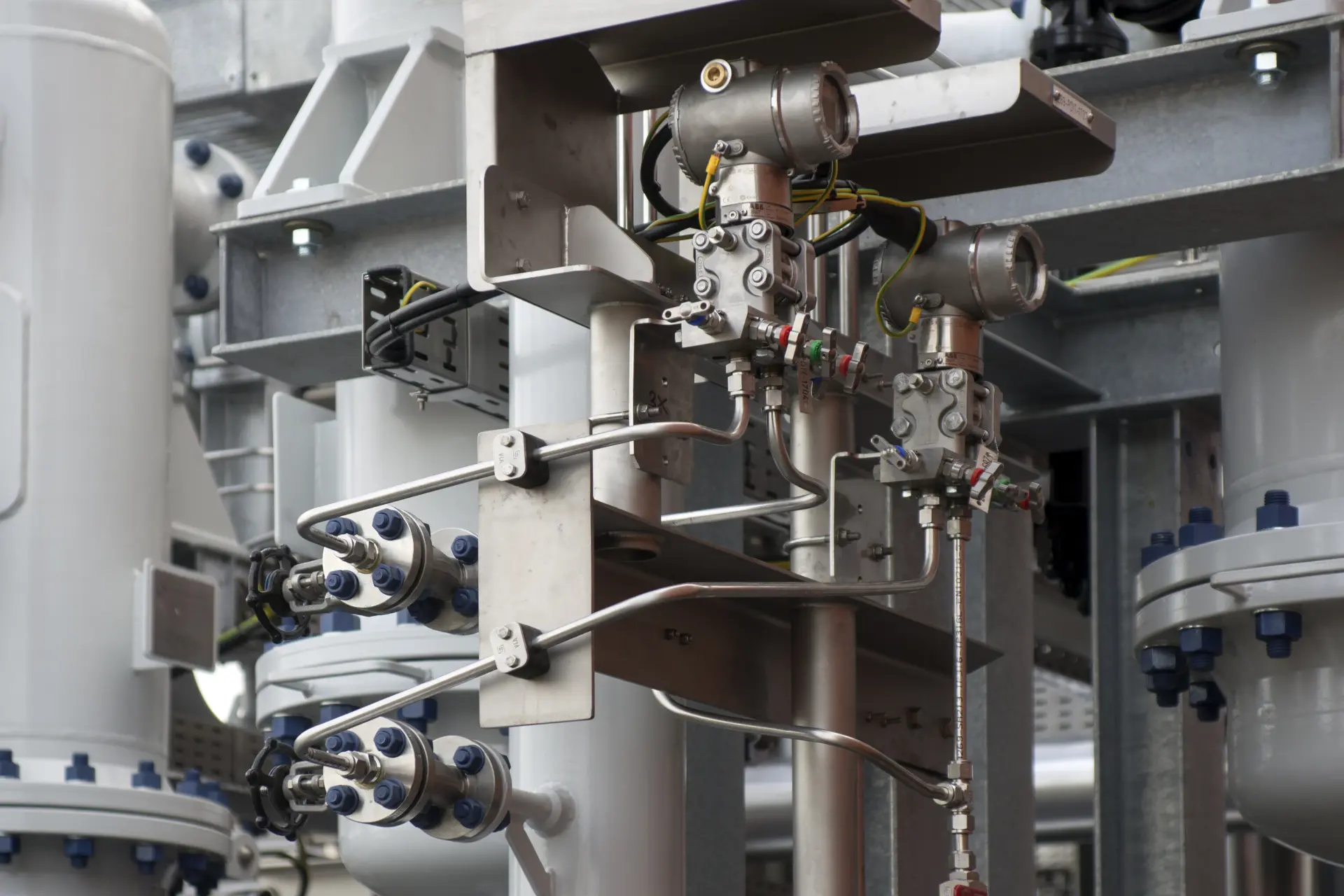
- Field instruments including pressure, temperature, and flow measurement
- Dewpoint analyzer for continuous dewpoint monitoring
- Local control panel with indication, control & HMI interface compatible with plant DCS
Optional
Key features
For onshore applications, HADETEC air dryers are designed to operate reliably in harsh environments such as dusty, sandy, and high-temperature conditions, including hazardous classified areas. For offshore installations, designs focus on compactness, corrosion resistance, and durability to withstand marine conditions and limited available space.
- Pressure vessel design: Filter housings & adsorber vessels designed in accordance with ASME VIII DIV.1/2 and U-STAMP or PED
- Robust construction: Engineered for continuous operation using high-quality, durable materials
- High durability: Use of corrosion-resistant materials such as SS316L components, 6MO and Super Duplex tubing
- Enhanced filtration systems: High-efficiency inlet filtration to protect against particles up to 0.01 micron
- Air quality performance: Capable of achieving ISO 8573-1 Class 1 for Pressure Dew Point (PDP), ensuring ultra-dry compressed air
- Offshore-grade protection: C5M/C5X coating systems for maximum corrosion resistance in marine environments
- Suitable for extreme climates: Winterization for extreme low ambient temperature and tropicalization for extreme high ambient temperatures
- Hazardous area compliance: ATEX/IEC-certified equipment
- Weatherproof design: IP55 - IP66 / NEMA 4X stainless steel 316L control panels
- Compact & modular skid design: Optimized layouts for easy transport, installation, and minimal footprint, especially suited for offshore deck limitations
- Engineering standards: Interconnecting piping designed in accordance with ASME or DIN standards
Each unit is tailor-made based on required flow, pressure, and dew point performance, ensuring optimal system efficiency and long-term reliability.